
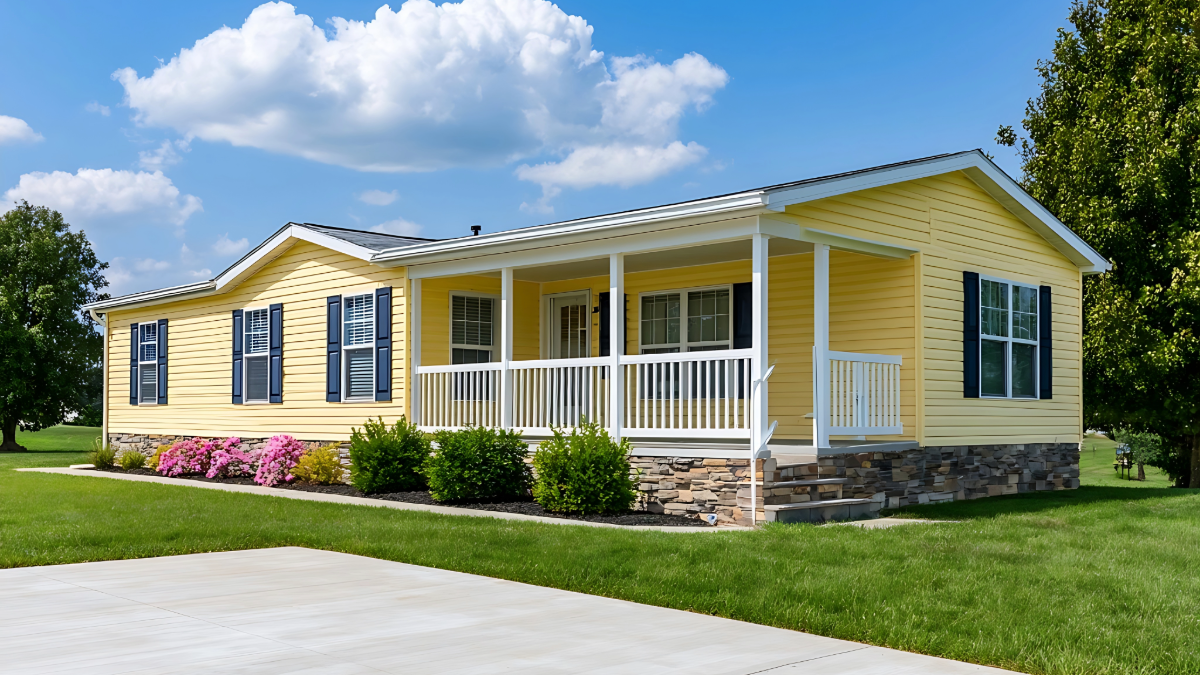
A manufactured home starts life as personal property with a certificate of title, like a vehicle. A house on a foundation is real property, conveyed by deed. Somewhere between the factory and your closing, one has to become the other, and when that step was skipped years ago it produces one of the more confusing title problems in Virginia and West Virginia.
Two kinds of ownership, one structure
Manufactured homes are built to a federal construction standard and leave the factory titled through the motor vehicle system. If the home stays personal property, it is bought and sold with a certificate of title and it is not part of the real estate, even when it has been sitting on the same parcel for thirty years.
To become real property, the home generally has to be permanently affixed to land the owner holds, and the certificate of title has to be surrendered or cancelled through the appropriate state process. Only then does the home convey with the deed to the land.
The paperwork does not follow the concrete
Setting a home on a permanent foundation does not, by itself, make it real property. There is an administrative step, and skipping it is common. The result is a house that looks permanent, is taxed in confusing ways, and has a certificate of title floating somewhere that nobody has thought about since the Clinton administration.
Why it matters at a closing
Financing is the usual place it surfaces. Most conventional mortgage products secure real property. If the home is still titled as personal property, the lender may not be able to lend on it as a house, and the buyer discovers this well into the process.
Title insurance follows the same logic. A title policy insures an interest in real estate. Where the home remains personal property, the policy covers the land, and the structure sitting on it is outside the coverage. That is a meaningful gap and it is not always obvious from the commitment.
The missing certificate
The most common practical problem is a certificate of title that cannot be found. The original owner may have died, the dealer may be long out of business, and a lien may appear on the certificate that was paid off decades ago and never released. Clearing that is the same species of problem as a missing lien release, and it takes the same kind of patient work chasing an entity that may no longer exist.
Start this early or it will move your closing date
Converting a manufactured home to real property, or reconstructing a lost certificate, involves a state agency rather than the clerk’s office, and agency timelines are not contract timelines. This is not a week of work. Find out whether the conversion happened before you go under contract, not after.
Land, leases, and communities
If the home sits in a community where the lot is leased rather than owned, the conversion to real property is generally not available, because it requires the home to be affixed to land the owner holds. In that case you are buying the home as personal property and holding a leasehold in the site. That is a legitimate transaction, but it is a different one, financed differently, and it is not what most buyers picture.
Where the buyer owns the land, the questions look more like any other rural purchase: access, boundaries, and the utilities. Well and septic issues in particular are covered in buying rural property with a well and septic.
West Virginia works differently
Both states have processes for converting a manufactured home to real property, but the agencies, the forms, and the recording requirements are not the same. West Virginia records deeds with the county clerk rather than a circuit court clerk, and the conversion paperwork runs through its own state channel. Do not assume a Virginia process transfers across the line.
How we help
We determine from the record whether the home was ever converted to real property, identify what is missing when it was not, and tell you early what the conversion or the certificate reconstruction will involve so it can be built into the timeline rather than discovered against it. Where the home is remaining personal property, we make sure everyone understands what the deed and the policy do and do not cover.
Buying or selling a manufactured home?
Send us the property and we will tell you whether the home is real property or personal property on the record, and what it takes to fix it if the conversion never happened. Independent, attorney-led title and escrow across Virginia and West Virginia.
Get Your Free Quoteor call (703) 552-4155
Common questions
Is a manufactured home real estate?
Not automatically. It leaves the factory as personal property with a certificate of title. It becomes real property only when it is permanently affixed to land the owner holds and the certificate is surrendered or cancelled through the state process.
How do I know if the conversion was done?
The record is where we look. If the certificate of title was never cancelled, the home is still personal property regardless of how permanent it looks. This is one of the first things we check on a manufactured home file.
Can I get a normal mortgage on one?
Generally only if the home has been converted to real property. Most conventional mortgage products secure real estate, so a home still titled as personal property may not qualify for the loan the buyer assumed they would get.
Does title insurance cover the home itself?
A title policy insures an interest in real estate. Where the home remains personal property, the policy covers the land and the structure sits outside that coverage. Once converted, it conveys and is insured with the land.
What if the certificate of title is lost?
It has to be reconstructed through the state agency, and any lien shown on it has to be released even if it was paid decades ago. This takes time and involves an agency rather than the clerk’s office, so start it early.
What if the home is in a community on leased land?
Conversion to real property generally is not available, because it requires the home to be affixed to land the owner holds. You would be buying the home as personal property together with a leasehold interest in the site, which is financed differently.
This article is general information about manufactured home titling in Virginia and West Virginia. It is not legal or lending advice. Conversion procedures, agency requirements, and loan program eligibility vary by state and change over time, so confirm current requirements with us and with your lender.