
Commercial title search • Virginia & West Virginia
Commercial title search in Virginia and West Virginia.
Before capital commits, someone has to read every instrument recorded against the site. Liens, judgments, easements, restrictions, leases of record, and gaps in the chain all travel with the property. Prime Title & Escrow runs independent, attorney-led commercial title searches and examinations across Virginia and West Virginia.
Ready to start?
What we need to start
- The address, parcel number, or legal description
- Your contract or letter of intent, if you have one
- Your diligence deadlines and target closing date
- Any prior title policy or existing survey
Searching ahead of a letter of intent? We can run a preliminary look before you commit diligence dollars.
What is your role in the transaction?
Tell us where you sit in the deal.
Select your role to see what the search has to answer for your team. The rest of the page applies to every commercial title search.
What the record allows the business to do.
You are buying a site your operation has to run on. Whether the business can legally do what it needs to do there is decided by recorded instruments: access easements, parking and loading rights, utility agreements, and private covenants. We read those against how you intend to use the property, and tell you what the record supports and what it does not.
What matters to you
- Does legal access exist, and is it permanent?
- What do recorded covenants restrict?
- Are parking and loading rights recorded?
- Do utility easements reach the site?
- Is the expansion ground included in the description?
- What survives the sale?
The exceptions decide the value, not the price.
A recorded restriction, an easement crossing the developable area, a tenant option that removes your best space, or a survey conflict can move the value of a site before you ever take title. The search is where those items surface, and the exception schedule is where they get named. We work through both with your plan for the property in hand.
What matters to you
- Marketable title
- Exceptions that limit development
- Easements crossing usable ground
- Recorded tenant rights and options
- Access and frontage
- Mineral and mining reservations
- Anything that constrains the exit
Consistent diligence across every acquisition.
A fund cannot run its diligence differently on each file. We deliver commercial title searches and commitments on a consistent format, with exceptions tracked and curative status reported the same way every time, so your acquisitions team is reading a familiar document rather than decoding a new one.
What matters to you
- Consistent commitment format
- Exception schedules tracked the same way
- Entity and fund authority in the chain
- Curative status reported on a cadence
- Multi-parcel coordination
- Documentation your file can close on
Every owned parcel, found and read.
In a merger, acquisition, or divestiture, the real estate is a schedule item until it is a problem. We search each owned parcel, surface secured debt, recorded leases, change of control language in recorded documents, and any parcel the schedule missed, and we deliver it on the transaction's timetable.
What matters to you
- Every owned parcel identified
- Secured debt against the real estate
- Recorded leases and memoranda
- Change of control language in recorded instruments
- Parcels the schedule missed
- Releases required at closing
A clear read on what the record exposes.
You do not need the exception schedule. You need to know whether anything in it threatens the thesis, the timeline, or the capital. We summarize what the search found in terms of consequence, flag what is material, and escalate early rather than at the deadline.
What matters to you
- What the search actually found
- Which items are material
- Exposure in dollars where it can be stated
- What threatens the timeline
- What we are doing about each item
- Escalation before a deadline, not after
Search product your team can work from.
We deliver the commitment, the underlying documents, and the survey review in a form counsel can actually use: exceptions tied to the instruments that created them, requirements stated plainly, and curative items tracked to closing without duplicating what your team is already doing.
What matters to you
- Title exceptions tied to their instruments
- Underlying recorded documents delivered
- ALTA survey review against the commitment
- Curative requirements stated plainly
- Entity authority in the chain
- Recordability confirmed
- Policy and endorsement scope
The search is the diligence
What a commercial title search actually examines.
A commercial search reads the record, not the building. We trace the chain of title to a solid root, pull every deed of trust, lien, and recorded lease against the parcel, search the judgment docket against every entity and individual in that chain, and collect the easements, covenants, and reservations that bind the land.
The output is a title commitment: what has to be cleared before you close, and what will remain as an exception on your policy. Reading that exception schedule against your plan for the property is where the value of the work actually sits.
The commercial buyer's side of closing, in under a minute
What we handle for commercial buyers
- A full title search and commitment
- ALTA survey coordination and review
- Clearing liens, judgments, and defects
- Confirming entity and signing authority
- Owner's and lender's title insurance
- Virginia recordation taxes and recording
- Secure escrow for large commercial wires
Go deeper by property type
What are you searching?
Every property type hides its risk in different recorded instruments. Each guide below goes deep on yours, with the same six role views as this page.
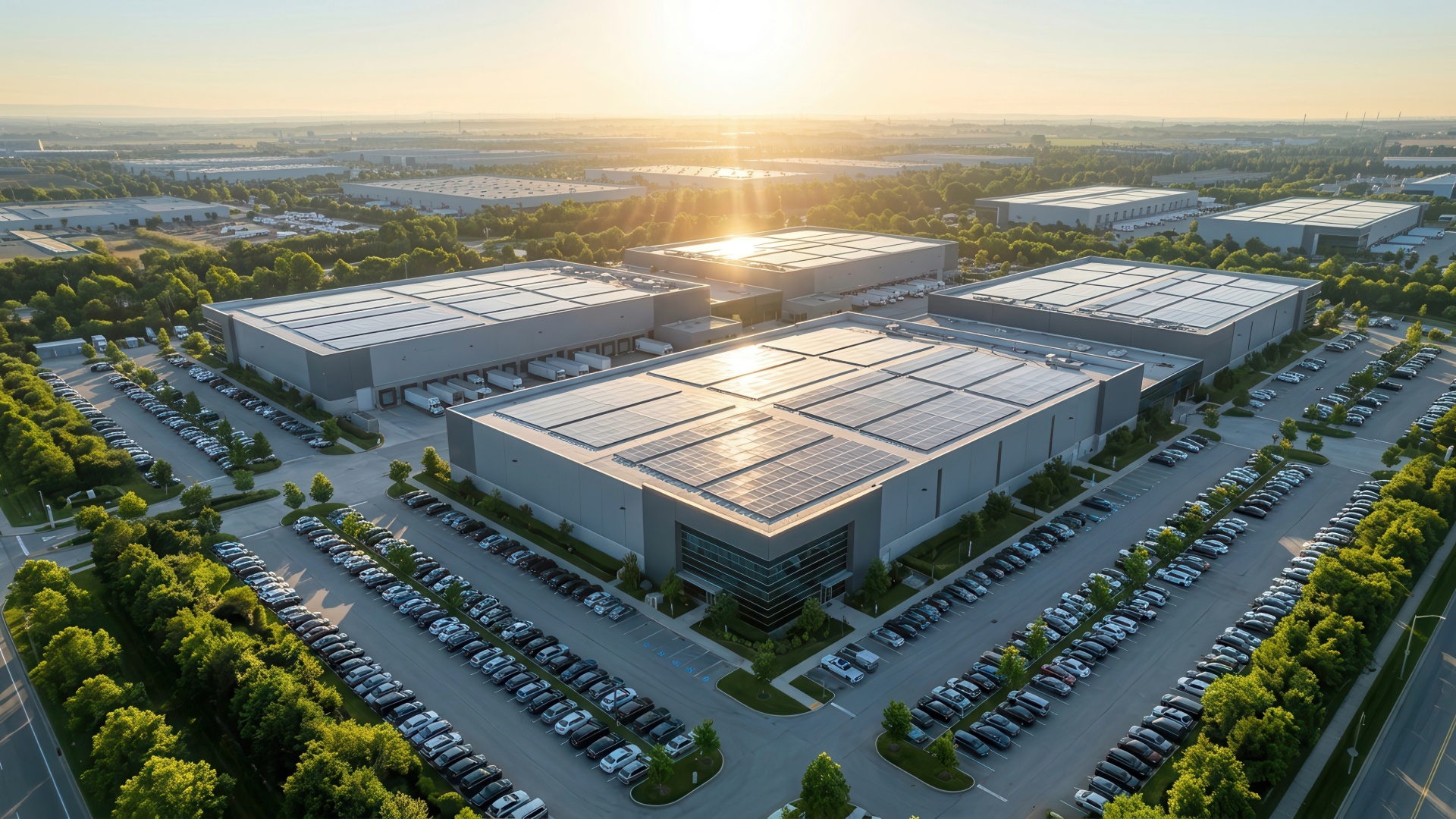
Data Centers
Power, fiber, access, and expansion rights, reviewed in the busiest data center market on earth.
Explore Data Centers
Industrial
Truck access, rail rights, tenants in place, and the liens that follow recent work.
Explore Industrial
Multifamily
Hundreds of leases, deposits, estoppels, and debt, all landing together in one closing.
Explore Multifamily
Office
Garage agreements, shared facilities, condo structures, and tenant rights in a repriced market.
Explore Office
Retail
REAs, exclusives, anchor rights, and outparcels: the recorded paper that runs a center.
Explore Retail
Land
Access of record, proffers, minerals, rollback taxes, and descriptions that match the survey.
Explore Land
Inside Virginia's commercial market
Why Virginia, and why it pays to close it carefully.
Northern Virginia is the busiest commercial real estate market many investors will ever touch. It is also one of the most competitive, with tight supply and fast-moving deals. Here is the picture, and what it means for your purchase.
The internet runs through here
Share of global internet traffic routed through Loudoun, Prince William, and Fairfax
About 70% of the world's internet traffic passes through Northern Virginia, the engine behind its commercial boom.
Industry estimate / Mordor Intelligence
Space is scarce
Northern Virginia data center vacancy rate, recent periods
Vacancy has fallen to a record 0.5%. Sites and space move fast, so your closing has to keep pace.
CBRE Research, 2025
Built up fast
Loudoun County data center footprint, in square feet
Loudoun's footprint grew about 2.5x in six years, and data centers now fund close to half the county's budget.
Industry / City Journal
Challenges, and how we clear them
What a commercial search turns up, and what we do about it.
Title defects and old liens
A property's past can hide unpaid liens, judgments, or gaps in the chain of ownership.
How we help: we search the full title history, clear every issue before you close, and back it with title insurance.
Survey, easements, and access
Boundary lines, recorded easements, and legal access can all surface problems on land and built sites alike.
How we help: we coordinate the ALTA survey and review it for encroachments and access before you commit.
Zoning and entitlement
Loudoun ended by-right data center zoning in 2025, and new projects now run through public hearings and special exceptions.
How we help: we make sure your title reflects every recorded restriction and easement, and we coordinate with your land use counsel.
Power and utility easements
On many Virginia sites, value depends on power, and on the easements that carry it across the land.
How we help: we review utility and transmission easements so there are no surprises about what crosses your property.
Virginia transfer and recordation taxes
Virginia layers state recordation tax, local tax, and Northern Virginia regional fees onto a purchase, and the buyer pays the deed recordation tax.
How we help: we calculate the exact recordation taxes and fees for your jurisdiction and handle the recording.
Mechanic's lien exposure
Recent construction or renovation can leave lien exposure, and Virginia's filing windows are short.
How we help: we check for unpaid work, require lien waivers, and arrange the right title coverage.
Entity authority and multi-party deals
Deals held in LLCs, partnerships, or out-of-state entities need signing authority confirmed before anyone reaches the table.
How we help: we confirm authority and prepare the documents each structure requires under Virginia law.
Large-dollar wire fraud
A single commercial wire is a high-value target, and fraud attempts show up in roughly one of every three deals.
How we help: we use secure escrow and verified instructions, and confirm by phone before any funds move.
The risk we manage
The work that happens before your capital is at the table.
$600B+
in risk the title industry clears for buyers and lenders each year
ALTA, 2026
Nearly 60%
of transactions need three to five title issues resolved before closing
ALTA, 2026
1 in 3
real estate deals face an attempted wire fraud
ALTA survey
$150K to $200K
average wire fraud loss, and commercial deals run higher
ALTA / Stewart
On a commercial purchase, this is the difference between a clean closing and an expensive surprise.
What Prime handles
What the search covers, from order through commitment.
- Title search and commitment
- ALTA survey coordination
- Exception and requirement tracking
- Easement and access review
- Entity and signing authority
- Escrow deposit management
- Lender coordination
- Payoff and release coordination
- Closing statements
- Secure funding
- Document recording
- Final title-policy issuance
How the search runs
Five steps, from order to a commitment you can work from.
1
Open and order
Send the address, parcel number, or legal description. We open the file and begin the examination the same day where we can.
2
Examine the chain and the names
We trace the deeds to a solid root, pull every recorded lien and lease, and search the judgment docket against each entity and individual in the chain.
3
Issue the commitment
You receive the commitment with the underlying documents, requirements stated plainly, and the exception schedule tied to the instruments that created it.
4
Review the survey against the record
We reconcile the ALTA survey with the recorded easements, confirm legal access, and identify encroachments and conflicts before diligence closes.
5
Fund and record
We protect and disburse the funds, record the documents, and deliver your insured title.
Personalized to your seat
What this means for your team.
Operational confidence:
Know what the record permits the business to do, before capital commits.
Better risk visibility:
See every exception that touches development, income, financing, or the exit.
Controlled execution:
The same commitment format and exception tracking on every acquisition.
Transaction alignment:
Every owned parcel found, read, and reported on the transaction timetable.
Decision-ready information:
See material risks, costs, deadlines, and funding requirements without sorting through every document.
Cleaner coordination:
Track title, survey, curative, lender, escrow, and recording items through one process.
Why buyers choose Prime
Local records, legal judgment, and no divided loyalty.
Local to Data Center Alley
Based in Leesburg, in the heart of Loudoun County. We know these circuit court records and clerks' offices firsthand.
Attorney-led
Real estate attorneys read the exceptions themselves, so what a recorded instrument actually does gets legal judgment, not a summary.
Independent and neutral
No affiliated arrangements. We have no reason to soften what the search found or who it affects.
Funds protected
When the search becomes a closing, secure escrow and verified instructions guard the wires that follow.
Commercial title search questions
What commercial buyers ask about the search.
Who pays Virginia's recordation and transfer taxes on a commercial purchase?
As the buyer, you pay the state recordation tax on the deed, set at $0.25 per $100 of value, plus any local recordation tax and the recordation tax on your deed of trust. The seller generally pays the grantor's tax, and Northern Virginia jurisdictions add regional fees such as the WMATA capital fee and the regional congestion relief fee. We calculate the exact amounts for your jurisdiction and handle the recording.
Do you coordinate ALTA surveys?
Yes. We order and review the ALTA survey for easements, encroachments, and legal access, and we add the title endorsements your lender requires based on what the survey shows.
Can you close a deal held in an LLC, partnership, or out-of-state entity?
Yes. We confirm signing authority, prepare the documents each structure needs, and work through any Virginia registration questions with your counsel so authority is never in doubt at closing.
We are buying land for development. What title issues should we watch for?
The common ones are utility and access easements, recorded restrictions and zoning conditions, mechanic's lien exposure from prior work, and boundary or survey questions. We flag each of these early and clear what we can before you close.
Can you handle a 1031 exchange?
Yes. We coordinate with your qualified intermediary, prepare the closing to fit the exchange, and protect your identification and closing deadlines.
How do you protect a large commercial wire?
We hold funds in secure escrow, use verified wiring instructions, and confirm details with you by phone before anything moves. We will never send new instructions by email, and we ask you to call us before you wire.
Do you work with our lender, broker, and attorneys?
Yes. We coordinate with every party in the deal, keep the title and escrow side on schedule, and make sure each requirement is met before closing day.
Role-specific questions
Questions from your seat at the table.
Can you confirm the business can operate at the property?
We confirm what the recorded documents allow and restrict: easements, covenants, access, and parking rights that run with the land. Zoning and permitting determinations sit with the locality and your land use counsel, and we coordinate our title work with them.
Can closing be timed around our operations?
Yes. Tell us when the business needs possession, and we build the signing, funding, and recording sequence around that date as far as the parties and the lender allow.
How early should Prime see the deal?
At the letter of intent, ideally. A title order can open before the contract signs, which means the commitment, the survey, and any curative work start ahead of your diligence clock instead of inside it.
We plan to reposition and resell. Does that change the title work?
It sharpens it. Exceptions a long-term holder might live with can complicate a future sale or refinance, so we flag the ones that follow the property and work to clear what can be cleared now.
Can you close through layered entities and approval chains?
Yes. We collect and verify formation documents, resolutions, and signing authority for each entity in the structure, and we build the escrow instructions and signature blocks to match your approval process.
How do you handle large escrow deposits?
Deposits are held in escrow under written instructions, disbursed only when the stated conditions are met, and documented on the settlement statement, with wire instructions verified by phone before any funds move.
The property transfers inside a company acquisition. What changes?
The structure decides the paperwork. An asset purchase moves the real estate by deed; an equity purchase moves the entity that owns it. We coordinate deeds, assignments, consents, and lien releases with deal counsel so the real estate closes with the transaction.
Can the real estate closing match the corporate closing date?
We sequence our side, title, escrow, funding, and recording, to the wider deal calendar. Third-party consents and lender timing sit outside our control, so we surface those dependencies early.
What visibility do we get while the file is open?
A clear view of the title commitment, the open items, the funding requirement, and the dates that matter, from a team you can reach directly. No document dump, and no surprises at the wire deadline.
Who is accountable on your side?
Named principals. Anthony I. Shin, Esq. and Adam L. Engel, Esq. lead the firm, and attorney oversight sits on every commercial file.
How do you track exceptions and curative items?
Through the updated title commitment and a running open-items list shared with counsel and the lender, so every requirement, exception, and curative document has an owner and a status before closing week.
Who prepares the settlement statement and escrow instructions?
We do, as settlement agent, and we circulate both for review so counsel, lender, and client sign off on the figures and the conditions before funds move.
Make sure the property works for the business.
Tell us how the property will be used, who will own it, and when the business needs to take possession.
Evaluate the title before you commit more capital.
Send Prime the contract, development plans, financing timeline, and diligence deadlines.
Bring Prime into the transaction workflow.
Coordinate title, survey, entity, escrow, and closing requirements through one attorney-led team.
Coordinate the real estate with the corporate closing.
Tell us how the property fits into the acquisition, merger, restructuring, or divestiture.
Get clarity on risk, timing, and funds.
Prime can provide a direct view of material title issues and closing readiness.
Put the title and settlement work in motion.
Send the contract, entity documents, lender information, survey, and target closing date.
(703) 552-4155
118 Edwards Ferry Rd NE, Unit 210, Leesburg, VA 20176